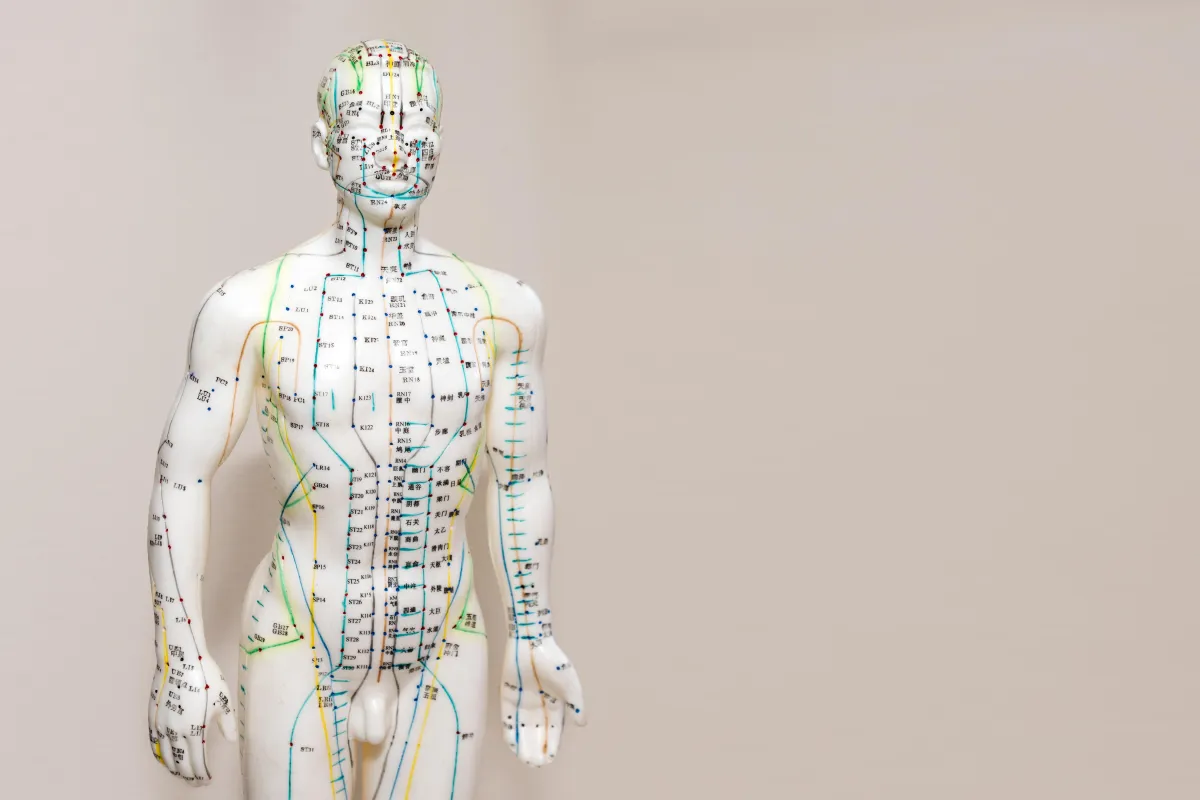
How does acupuncture work?
Acupuncture has been practiced for thousands of years, and modern research continues to explore how it affects the body.
From a Chinese medicine perspective, acupuncture works by helping regulate the flow of qi, blood, and communication through the body’s channel system. When there is pain, tension, stress, stagnation, deficiency, or imbalance, acupuncture points are chosen to help the body return to a more balanced state.
From a biomedical perspective, acupuncture appears to influence the nervous system, connective tissue, circulation, pain signaling, inflammation, muscle tension, hormone regulation, and the body’s natural relaxation response.
Both perspectives point to the same larger idea:
Acupuncture supports the body’s ability to regulate and heal.
Acupuncture Works Locally and Systemically
Acupuncture starts with a very small stimulus at specific points on the body. That local stimulus can create broader effects throughout the nervous system and body.
This is one of the reasons acupuncture may be used for many different concerns, including pain, headaches, stress, sleep, digestion, menstrual symptoms, fertility support, hot flashes, anxiety, and overall wellness.
Acupuncture is not just working where the needles are placed. It can have a whole-body effect.
Acupuncture and the Nervous System
One of the most important ways acupuncture may work is through the nervous system.
When acupuncture points are stimulated, sensory nerves send signals to the spinal cord and brain. This may influence pain processing, muscle tension, circulation, stress response, and the release of the body’s natural chemicals involved in pain relief and relaxation.
Research suggests acupuncture may affect the central nervous system and support the release of substances such as endorphins and other neurochemicals that help regulate pain and mood.
Clinically, this is why many patients feel calmer, sleepier, or more settled during and after treatment.
Acupuncture and Pain Relief
Acupuncture is commonly used for pain, including back pain, neck pain, headaches, migraines, joint pain, muscle tension, and chronic pain.
Pain is not only a tissue problem. It also involves the nervous system, circulation, inflammation, muscle guarding, stress, sleep, and emotional load.
Acupuncture may help pain by:
Reducing muscle tension
Improving local circulation
Calming pain signaling
Supporting the body’s natural pain-relieving chemicals
Helping the nervous system shift out of a guarded state
Supporting relaxation and recovery
This is also why acupuncture treatment for pain may include points away from the painful area. The goal is not only to chase the symptom, but to support the whole system contributing to the pain pattern.
Acupuncture and the Stress Response
Many people live in a near-constant state of stress. Over time, the body may become used to being tense, guarded, alert, or exhausted.
Acupuncture may help support the autonomic nervous system, which includes the sympathetic “fight or flight” response and the parasympathetic “rest and digest” response.
When the nervous system begins to settle, patients may notice:
Slower breathing
Less muscle tension
Better digestion
Improved sleep
A calmer mood
Less reactivity
A deeper sense of relaxation
This is one of the reasons acupuncture can feel restorative, even when the main reason for treatment is physical pain.
Acupuncture and Digestion
Digestion is strongly influenced by the nervous system.
When the body is stressed, digestion may slow down, speed up, or become irregular. This can contribute to symptoms such as bloating, reflux, constipation, loose stools, nausea, appetite changes, or IBS-type patterns.
Acupuncture may help support digestion by calming the stress response, supporting parasympathetic activity, and addressing Chinese medicine patterns related to the Spleen, Stomach, Liver, and overall qi flow.
Acupuncture and Whole-Body Balance
In Chinese medicine, symptoms are not viewed in isolation.
For example, headaches may be connected to stress, sleep, hormones, jaw tension, digestion, posture, or cycle changes. Hot flashes may be connected to sleep, stress, yin deficiency, hormonal shifts, and emotional strain. Digestive symptoms may be connected to anxiety, overwork, food choices, inflammation, and nervous system dysregulation.
Acupuncture treatment looks at the whole picture.
That does not mean every symptom will change overnight. But it does mean treatment is designed to support the person, not just the diagnosis.
The Body Knows How to Heal, But It May Need Support
The body is always trying to adapt. It is always trying to protect you, regulate you, and bring you back toward balance.
But chronic stress, pain, poor sleep, hormonal changes, illness, trauma, inflammation, overwork, and emotional strain can make it harder for the body to find that balance on its own.
Acupuncture gives the body a gentle signal.
A signal to soften.
A signal to regulate.
A signal to increase circulation.
A signal to release tension.
A signal to shift out of survival mode.
That is where healing often begins.
Have Questions?
If you’re curious how acupuncture may support your specific symptoms, you’re welcome to reach out or schedule an appointment.
Text: 612-405-3775
Email: [email protected]
References:
Evidence Based Acupuncture. Acupuncture Scientific Evidence.
Johns Hopkins Medicine. Acupuncture.
National Center for Complementary and Integrative Health. Acupuncture: Effectiveness and Safety.
National Center for Complementary and Integrative Health. Chronic Pain and Complementary Health Approaches: Usefulness and Safety.
Robinson, C. L., et al. (2022). Acupuncture as part of multimodal analgesia for chronic pain. Orthopedic Reviews.
