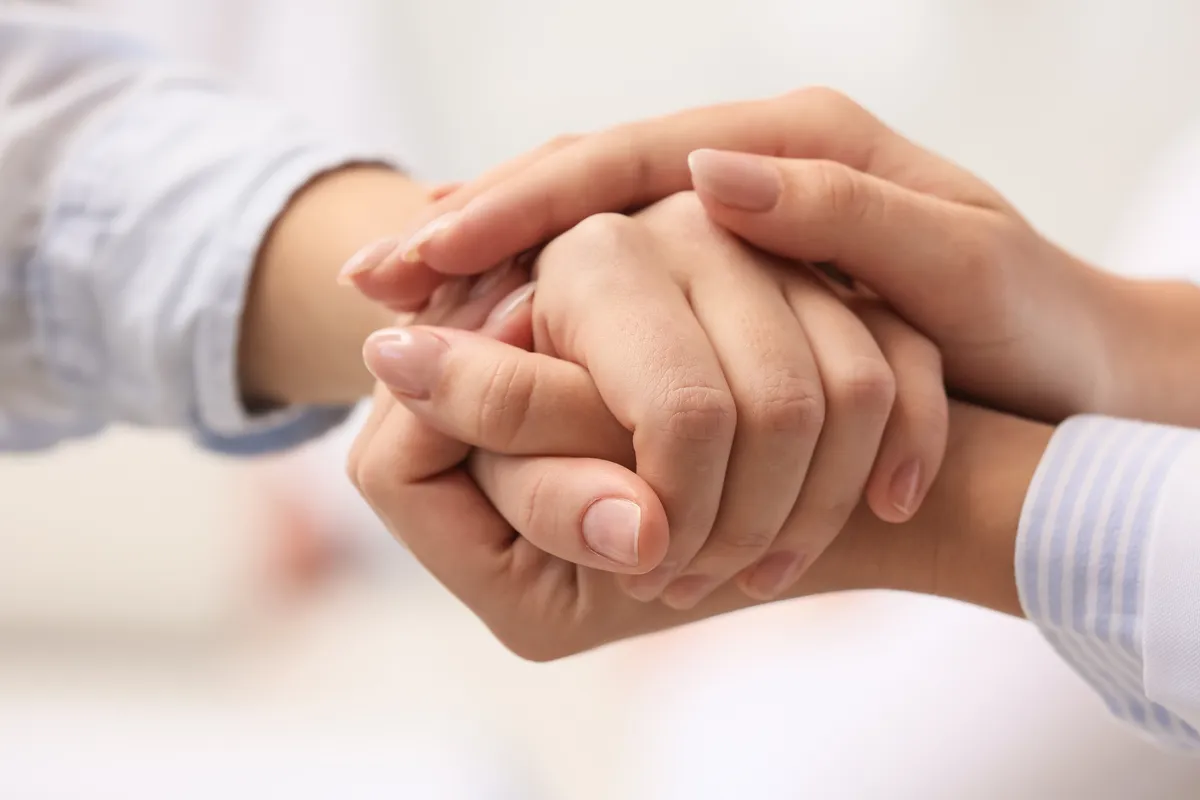
What Holds the Ones Who Hold Everything?
On flexibility, chronic pain, and the quiet wisdom of being supported
There are women who seem to hold everything together.
They care for their families, support their friends, tend to their patients or clients, and anticipate the needs of those around them. They are often the people others turn to when life becomes difficult.
Many have become remarkably good at adapting, accommodating, and carrying responsibilities that extend far beyond their own.
But who holds them?
Lately, I've been reflecting on this question as I've noticed an increasing number of women in my clinic living with chronic pain, hypermobility, and Ehlers-Danlos syndrome (EDS).
Many experience headaches, digestive disturbances, fatigue, and persistent muscular tension. Some also have histories of trauma or have spent much of their lives caring for others.
I find myself wondering about the relationship between the physical experience of holding ourselves together and the emotional experience of holding everything together for everyone else.
Not because one causes the other, but because sometimes our bodies and our lives invite us to recognize patterns and consider similar questions.
What does it mean to be flexible? What allows us to feel supported? And what happens when we spend so much of our energy holding that we forget what it feels like to be held?
When Flexibility Requires More Support
Ehlers-Danlos syndrome refers to a group of inherited connective-tissue disorders. Connective tissue helps provide strength and support throughout the body, including the joints, skin, and other structures.
For people with hypermobile EDS, joints may move beyond their typical range of motion, creating challenges with stability.
This can contribute to a variety of symptoms, including:
Chronic joint and muscular pain
Persistent tension in the neck, shoulders, and back
Headaches and migraines
Digestive disturbances
Fatigue and difficulty recovering from activity
A body that appears exceptionally flexible may actually be working extraordinarily hard to maintain stability.
When joints lack sufficient passive support, the surrounding muscles must work harder to stabilize them. This can contribute to muscular tension, guarding, and pain.
There is an important distinction here: not all muscular tension is something that needs to be released. Some of it serves a protective purpose.
The goal is not simply to encourage the body to let go, but to help it experience greater comfort while maintaining the support it needs.
And that brings me to a parallel I've been noticing in the lives of some of the women I treat.
The Women Who Carry So Much
Many of the women I see are caregivers, therapists, mothers, and people who have spent years tending to the needs of others.
They are compassionate, capable, and deeply attuned to the people around them.
Some have learned to anticipate the emotional needs of others before recognizing their own. Others have become accustomed to managing difficult situations, remaining flexible, and finding ways to keep everything moving.
These qualities can be tremendous strengths.
But what happens when the expectation to care for others leaves little room to care for ourselves?
In The Myth of Normal, Dr. Gabor Maté explores how cultural expectations, chronic stress, and the suppression of personal needs can influence our well-being.
Women, in particular, are frequently expected to provide emotional support, maintain relationships, and shoulder caregiving responsibilities, often without receiving equivalent care themselves.
We praise women for being endlessly giving, even when that giving comes at a considerable personal cost.
Sometimes the person everyone relies upon has very few people she can rely upon herself.
This is not a matter of blaming women for failing to establish boundaries. It is also about recognizing the expectations placed upon them and the support that may be missing from their lives.
There is a difference between having the capacity to care for others and being expected to carry more than one person can reasonably sustain.
Our bodies need support to remain flexible.
Perhaps our lives do, too.
What Chinese Medicine Teaches Us About Flexibility and Support
Chinese medicine offers a way of understanding health through the relationships between different systems of the body.
Rather than considering pain, digestion, fatigue, and emotional well-being as entirely separate experiences, it examines how these patterns may interact.
Two systems I frequently consider when treating women with chronic pain and muscular tension are the Liver and Spleen.
The Liver: Movement, Flexibility, and the Sinews
In Chinese medicine, the Liver is associated with the smooth movement of Qi and the health of the sinews, including tendons and ligaments.
Its corresponding element is Wood.
Healthy Wood embodies flexibility, direction, and the capacity to respond to changing circumstances.
Consider a tree.
Its branches must be flexible enough to move with the wind, but that flexibility depends upon the stability of its trunk and roots.
Without support, flexibility alone cannot sustain the tree.
When Liver Qi becomes constrained, we may see patterns of:
Muscular tension and pain
Headaches
Irritability or frustration
A sense of physical or emotional restriction
These are traditional Chinese medicine patterns rather than explanations for the underlying connective-tissue changes in EDS.
Still, the relationship between movement and support raises an interesting question:
What allows us to remain flexible without losing our center?
The Spleen: Nourishment and the Ability to Sustain Ourselves
In Chinese medicine, the Spleen is associated with Earth.
It supports digestion, the transformation of food into Qi, and the nourishment of the muscles and body.
When Spleen Qi becomes deficient, we may see:
Fatigue and reduced stamina
Digestive disturbances
Muscular weakness or heaviness
Difficulty recovering from physical or emotional demands
The Spleen is also associated with Yi, our capacity for thought, intention, and focused attention.
When the mind is continually occupied with anticipating needs, managing responsibilities, or worrying about others, it can be difficult to find the quiet necessary to attend to ourselves.
In Five Element theory, Wood helps regulate Earth. But when this relationship becomes unbalanced, we may see a pattern described as Liver overacting on Spleen.
In the clinic, this may present as muscular tension and headaches alongside digestive disturbances and fatigue.
The traditional treatment principle is not simply to move constrained Liver Qi, but also to nourish and strengthen the Spleen.
Movement needs nourishment. Flexibility needs support. Giving needs to be balanced with receiving.
And perhaps this is where Chinese medicine offers us something worth considering beyond the treatment room.
When the Body Is Always Bracing
There is another aspect of chronic pain that deserves our attention: the body's need for protection.
When joints are unstable, surrounding muscles may work harder to maintain their position. Persistent pain can also affect how the nervous system responds to movement and sensation.
The body may become accustomed to anticipating discomfort.
For some people, trauma and prolonged stress can add another layer of vigilance.
The shoulders remain elevated. The jaw tightens. The breath becomes shallow. The body prepares for what might happen next.
Not all muscular guarding is a trauma response, and not every person with hypermobility has a history of trauma. But for someone experiencing both, the physical and emotional demands of maintaining a sense of safety may overlap.
This is why I believe the question is not always, "How do we get the body to relax?"
Sometimes a more useful question is:
"What support does the body need before it can comfortably release what it is holding?"
Acupuncture may be one part of that support.
Research suggests that acupuncture can help manage certain forms of chronic pain and headaches, although studies specifically examining its effectiveness in EDS remain limited.
In practice, acupuncture may be used alongside appropriate strengthening, physical therapy, and other forms of care to address pain, muscular tension, and related symptoms.
The intention is not to correct the underlying connective-tissue disorder or simply release every tight muscle.
It is to consider what the individual needs to experience greater comfort, function, and stability.
This same question may be worth asking of our emotional lives.
What would help us feel supported enough to put down some of what we have been carrying?
What Would It Feel Like to Be Supported?
We cannot simply ask someone who is holding everything together to let go. We must also ask what will be there to support her when she does.
Perhaps one of the most meaningful questions we can ask ourselves is not how we can become better at managing everything, but how we might begin creating more room for ourselves within the lives we already lead.
That might look like:
Recognizing when we need physical or emotional support before reaching exhaustion.
Allowing others to help without feeling obligated to immediately give something in return.
Making space for rest, nourishment, and activities that restore us.
Noticing when we are taking responsibility for something that does not belong to us.
Seeking relationships and communities where care moves in both directions.
None of these things requires us to become less compassionate or less available to the people we love.
And individual self-care cannot replace the need for families, workplaces, and communities to share caregiving responsibilities more equitably.
We were never meant to sustain everything alone.
Perhaps the deeper lesson is that being supported does not diminish our strength. It allows us to use that strength without continually depleting ourselves.
We can begin asking not only what others need from us, but what we need to feel nourished, connected, and supported in return.
Because the ones who hold everything deserve to be held, too.
References & Further Reading
The following resources offer additional information about Ehlers-Danlos syndrome, chronic pain, acupuncture, Chinese medicine, and the relationship between stress, caregiving, and well-being.
Ehlers-Danlos Syndrome and Chronic Pain
1. Hypermobile Ehlers-Danlos Syndrome — GeneReviews
Hakim, A. (2024). Hypermobile Ehlers-Danlos Syndrome. GeneReviews, National Center for Biotechnology Information.
A clinical overview of hypermobile EDS, including joint instability, chronic pain, fatigue, digestive disturbances, headaches, and associated conditions.
2. Physical Therapy — The Ehlers-Danlos Society
An educational resource explaining the importance of muscular strengthening, joint stabilization, movement control, and individualized rehabilitation for people with EDS and hypermobility spectrum disorders.
Read about physical therapy and hypermobility
Acupuncture and Pain Management
3. Statement on the Use of Opioids in Pain Management of the Ehlers-Danlos Syndromes and Hypermobility Spectrum Disorders — The Ehlers-Danlos Society
The Ehlers-Danlos Society and EDS and HSD International Consortium Pain Working Group. (2021).
This statement discusses the multifactorial nature of pain in EDS and recognizes acupuncture as one possible component of comprehensive, individualized pain management.
Read the pain management statement
4. Acupuncture for Chronic Pain: Update of an Individual Patient Data Meta-Analysis
Vickers, A. J., et al. (2018). The Journal of Pain, 19(5), 455–474.
A large analysis of randomized clinical trials examining acupuncture for chronic musculoskeletal pain, osteoarthritis, chronic headaches, and shoulder pain.
The findings support acupuncture as a treatment option for certain chronic pain conditions, although the analysis was not specific to EDS.
5. Acupuncture for the Prevention of Episodic Migraine
Linde, K., et al. (2016). Cochrane Database of Systematic Reviews, Issue 6, CD001218.
A systematic review examining acupuncture for migraine prevention. The authors concluded that acupuncture may help reduce migraine frequency and can be considered a preventive treatment option.
Chinese Medicine, Stress, and Well-Being
6. Huang Di Nei Jing Su Wen: An Annotated Translation of Huang Di's Inner Classic — Basic Questions
Unschuld, P. U., & Tessenow, H. (2011). University of California Press.
A scholarly translation of the Huangdi Neijing Suwen, one of the foundational texts of Chinese medicine.
Chapter 44 discusses the traditional relationships between the Liver and sinews, Spleen and muscles, and Kidneys and bones.
Explore the annotated translation
7. The Myth of Normal: Trauma, Illness, and Healing in a Toxic Culture
Maté, G., & Maté, D. (2022). Avery.
An exploration of the relationship between chronic stress, emotional suppression, trauma, cultural expectations, and health.
The book provides a broader social and philosophical perspective on the ways caregiving expectations and the suppression of personal needs may affect well-being.
Note: The connections between physical flexibility, emotional adaptation, and caregiving explored in this article are reflective observations rather than established causal relationships. EDS is a connective-tissue disorder, and acupuncture does not correct its underlying connective-tissue abnormalities. The Chinese medicine concepts discussed here represent traditional diagnostic and philosophical frameworks rather than biomedical explanations of EDS.
